About the Guest
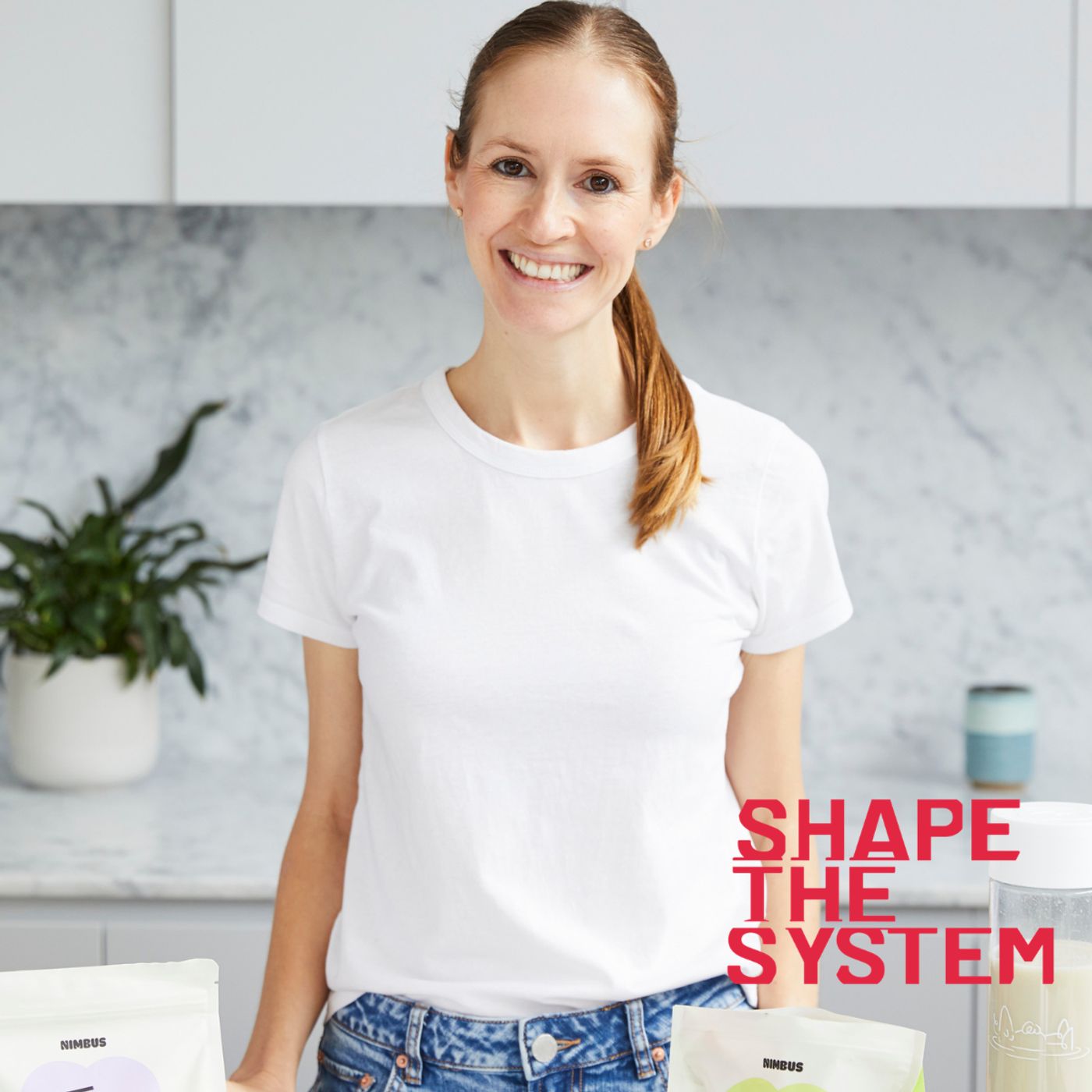
Alex Bekker is the founder of Nimbus, an Australian company that makes powdered plant milk (oat, soy and an oat barista blend). It ships without the water, and you mix it at home with a scoop and a shake. Alex started out as a professional ballet dancer. Around 2011 she got her first e-commerce job at Rocket Internet, hired over a coffee to set up a warehouse despite having no logistics experience. She went on to run companies for other owners, the last of which sold in 2018. After a few years off with two young children, she founded Nimbus on her own, with no co-founder. It has now sold around 850,000 litres of plant milk.
Episode Summary
At the end of 2020, Alex Bekker moved house from Waverley to the City of Sydney, practically next door. As a careful recycler, she checked her new council's bin rules and found that multi-material packaging, including cartons, wasn't accepted. When she looked up Waverley's rules, cartons weren't accepted there either. She had been wish-cycling them for years, putting them in the recycling and hoping for the best. In this in-person episode of Shape the System, host Vincent Turner talks with Alex about what really happens to the cartons our plant milk comes in, and how she built Nimbus to do away with them.
A carton is six layers of three materials: plastic, aluminium and paper. It was revolutionary when it arrived in the 1950s. The layers keep oxygen out, the carton is sterilised before filling, and milk stays shelf-stable without a fridge. That mattered long before refrigerated trucks (the "cold chain") criss-crossed the country, and it still gets milk to people who otherwise couldn't drink it. But as with so many single-use products of that era, nobody planned for what happens next. Alex puts the number of cartons in Australia at almost half a billion. She cites Australian Packaging Covenant Organisation figures of around 48 million kilograms placed on the market. Small cartons can go through container deposit schemes, though few are recovered. One factory turns cartons into building materials, but it takes about 4,000 tonnes, mostly clean factory off-cuts, against 48,000 tonnes sold. The one-litre cartons we use at home have no recycling stream at all. Even if recycling rates climb as predicted, Alex argues, they cover only about 15% of the problem, and the amount going to landfill keeps growing.
So she went upstream. Oat milk is about 90% water and almond milk can be up to 97%, so why ship the water? Before building anything, Alex surveyed 600 plant milk drinkers. They confirmed the packaging problem and raised two more. One was food waste, because opened cartons expire in households where everyone drinks something different. The other was a wish for simpler ingredients. Her first idea was a tablet like a bath bomb, but it would have needed to be the size of four dishwasher tablets and full of additives. After a stretch of kitchen experiments during COVID, her husband suggested hiring a food scientist, and two years later Nimbus had its product. The oats are soaked and treated with enzymes that break the starches down into simple sugars, the step that stops homemade oat milk turning slimy. They're then blended with avocado oil, calcium and a little salt and dried into a concentrated powder. Alex had designed the brand and packaging and done the costings before the recipe was final. She also read the food standards code herself before having a specialist lawyer check her claims.
Packaging was an education in itself. Customers often ask why Nimbus doesn't use paper or compostable packs. The powder contains oil and reacts with oxygen, so it needs a proper barrier, and even paper-look sugar bags are lined with plastic. Compostable packaging, Alex found, is riddled with greenwashing. Some packs just break down into microplastics faster. Others only compost in industrial facilities that a small share of Australian households can reach. They contaminate soft-plastic recycling, and in landfill they break down without oxygen and release methane. Her conclusion, which echoes earlier guests from Zero Co and the Plastics Research Council, is that plastic isn't the villain; single use is.
Unit economics shaped the whole design. Alex worked backwards from the shipping pallet. Fitting 15 boxes on each layer set the box size, and the number of pouches per box set the pouch size. Get that wrong and you might fit 400 products on a pallet instead of 1,000, doubling the freight cost. Selling online also means every order has to cover the product, shipping, packing, packaging and transaction fees, and still leave room for advertising. Nimbus's best seller is a box of six pouches, which is exactly the box that goes on the pallet, and it lasts an average drinker about three months. There's also a starter kit with a shaker bottle and scoop, subscriptions, and a five-kilogram bulk bag added by popular demand. Because the powder is light and shelf-stable, customers include Tasmanian hiking huts, remote lodges, ship suppliers and Australia's Antarctic bases. Bulk food stores and an ice-cream maker buy it too, as does a Melbourne chocolatier who found it worked where other milk powders failed.
On marketing, Alex made the brand modern and fun to get away from the poor reputation of powdered cow's milk. With little money left at launch, she ran Meta ads using images from a photo shoot. She then gifted product to small creators, making sure she could reuse their content as ads. Her editor eventually convinced her to front the videos herself, and the two of them now film 15 or 16 in half a day. It's a volume game, she says. Perhaps one ad in 30 is a winner, and authenticity matters more than polish. Because Meta now works out who to show an ad to from the ad itself, reaching campers means showing camping. She and Vincent also discuss the tension of a sustainability brand running a Black Friday sale, and why food, which people will buy and eat anyway, is different.
Alex measures success in cartons. Around 850,000 litres sold means about 850,000 cartons kept out of landfill, and a million isn't far off. It isn't always smooth. A supplier delay meant an order placed in June was still incomplete in November, a stressful position for a subscription business that can't run out of stock. She has handed customer service to someone else because of the mental load, hasn't had a day off apart from weekends since launch, and would count a January ski trip to Japan without working as a real milestone. Her favourite parts of the job are the impact and, for the first time in her career, making every decision herself. Coming up are more milks (almond has proved stubbornly hard, coconut less so) and a new product to replace another carton staple. Expansion beyond Australia will come gradually: Nimbus is already stocked by a large supermarket chain in Malaysia and a small chain in Singapore.
Key Takeaways
- Recycling can't keep up with cartons. One-litre cartons have no recycling stream in Australia. Even optimistic recycling rates cover only about 15% of the problem, and the amount sent to landfill keeps growing.
- Plant milk is mostly water, so ship the rest. Oat milk is about 90% water. Shipping a concentrated powder cuts weight, packaging and emissions, and avoids the waste of opened cartons that expire.
- Compostable isn't automatically better. Without industrial composting, which few households can reach, compostable packs can contaminate soft-plastic recycling or release methane in landfill.
- Design the pack from the pallet up. Nimbus sized its boxes and pouches to fill a pallet efficiently, and its best-selling bundle is exactly the box that ships on it.
- Selling food online means clearing the shipping hurdle. Each order has to cover the product, freight, packing and fees before any advertising. That pushes the business towards bigger, less frequent orders, subscriptions and bulk sizes.
- Founder-led, imperfect content wins on volume. With roughly one winning ad in 30, and Meta targeting based on the content of the ad itself, frequent authentic videos beat polished one-off campaigns.
Notable Quotes
"I've been wish-cycling these cartons for years, and this just stuck with me." — Alex Bekker
"You can't recycle your way out of it." — Alex Bekker
"It doesn't matter if we increase recycling — it's like 15% of the problem. The amount going to landfill is still getting larger." — Alex Bekker
"We say it's 90% water, ours is like 90% oats. And people will be like, 'Yeah, but when you add the water, it's still like 90% water.' I'm like, 'Yeah, that's the point.'" — Alex Bekker
"Plastic's been super demonised … But actually, it's a really pretty amazing material for what it can do. It's just how we use it and how we throw it away." — Alex Bekker
"Now it's better if it's imperfect. I think people prefer the real, authentic part." — Alex Bekker
"We've done like 850,000 now. So it's like 850,000 cartons. Like, that's how I measure it." — Alex Bekker
Resources
- Nimbus
- Food Standards Australia New Zealand (mentioned in episode)
- Australian Packaging Covenant Organisation (APCO) (mentioned in episode)
Shape the System is an independent podcast with support from KPMG High Growth Ventures
More about KPMG High Growth Ventures
Scale up for success. We’re here for that.
We navigate founders and their teams to the services they need to reach their next milestone.
From startup to scale and beyond. No matter where you are right now, we’ll get you the help you need to drive your business forward. We help founders fully realise their potential, as well as the potential of their team and their business, by connecting them to the expertise, skills and resources they need at every stage of their growth journey.
Our extensive experience in partnering with evolving businesses means that we can provide you with tailored support as well as independent and practical insights.
Whether you are looking to refine your strategy, establish your operations, prepare for a capital raise, expand abroad or simply comply with regulatory requirements, we are here to help.
Links:
Website: About (highgrowthventures.com.au)
LinkedIn: https://www.linkedin.com/showcase/kpmg-enterprise-high-growth-ventures/
Contacts: highgrowthventures@kpmg.com.au